Showing posts with label wine. Show all posts

27 Nov 2011

Du Pain, Du Vin ...

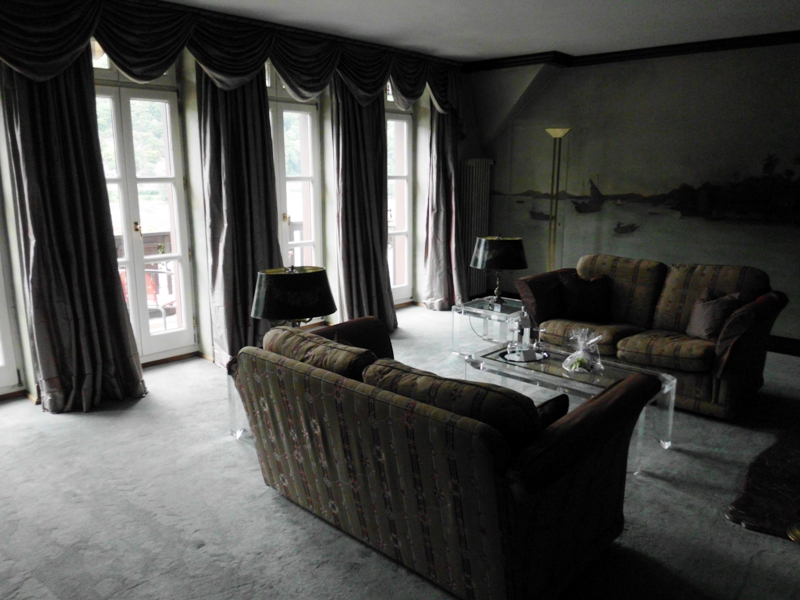
Jugendstil villa in Bonn - Bad Godesberg. November 2011.

In spite of alarming daily news reports about the euro crisis and the fact we still don't have a government after 500+ days of negotiating, the majority of us seem to lead our daily lives with little noticeable change.

For me personally, these are hectic but stimulating times. The past fortnight I've spent 4 days in England (London and the Cotswolds), 4 in France (Lille, mainly) and 2 in Germany (Bonn - Bad Godesberg). Most of the travelling was done for work, but I've managed to squeeze in a couple of days for myself.

Spare wine racks, anyone?
In my scarce free time I've been studying for next week's exam (I'm taking 'Communicative French' evening classes twice a week) and of course I had to attend two of the annual wine festivals that are common in France and Belgium in late autumn.

Some big, others small, these wine fairs are the perfect occasion to discover wines from independent winemakers and many of the smaller vineyards all over France.

As a result, we're now in dire need of extra wine racks, but I understand that's a luxury problem.

And now for some trivia:


My top 5 observations of the past 2 weeks.

  1. Lille is truly a beautiful city, with striking architecture, a vibrant atmosphere and wonderful restaurants.
  2. The French Alsace region, famous for its white wines, makes surprisingly good pinot noirs that offer great value for money.
  3. Anybody who thinks English people are cold and reserved, hasn't met my friends. I had the chance to meet up with several of them when I was in the Cotswolds and even though we don't see each other often, the time we spent together was once again heartwarming.
  4. Once you've learnt a language, even if you don't use it for ages, it's ingrained in your brain. I had French in school between the ages of 8 and 17, then didn't use it for almost 20 years. Now that I'm taking classes again, I'm surprised how quickly it all comes back.
  5. Bad Godesberg's residential villa quarter is stunning. When Bonn was still the capital of West Germany and later the official seat of united Germany's government (until 1999), many of the foreign embassies were located in stately Jugendstil villas.
Residential villas in Bonn - Bad Godesberg. November 2011.


So, my dear friends, what have you been up to?
♥ Bookmark or share this post ♥

13 Oct 2011

Lucky 13: Women Writers about Wine.


"Wine is the refined jewel that only a grown woman will prefer to the sparkling trinkets adored by little girls."
- Muriel Barbery (Gourmet Rhapsody)

"Only a fool tries to reconstruct a bunch of grapes from a bottle of wine."
- Jeanette Winterson (Art & Lies)

"Wine talks; ask anyone. The oracle at the street corner; the uninvited guest at the wedding feast; the holy fool. It ventriloquizes. It has a million voices. It unleashes the tongue, teasing out secrets you never meant to tell, secrets you never even knew. It shouts, rants, whispers. It speaks of great plans, tragic loves, and terrible betrayals. It screams with laughter. It chuckles softly to itself. It weeps in front of its own reflection. It revives summers long past and memories best forgotten. Every bottle a whiff of other times, other places, everyone...a humble miracle"
- Joanne Harris

“There are days when solitude is a heady wine that intoxicates you with freedom, others when it is a bitter tonic, and still others when it is a poison that makes you beat your head against the wall.”
- Colette

"What I do, and what I dream include thee, as the wine must taste of its own grapes."
- Elizabeth Barrett Browning (Sonnets from the Portuguese and Other Poems)

"...and I get refill number three or four and the wine is making my bones loose and it's giving my hair a red sheen and my breasts are blooming and my eyes feel sultry and wise and the dress is water."
- Aimee Bender (Willful Creatures: Stories)

"All Creatures know that some must die
That all the rest may take and eat;
Sooner or later, all transform
Their blood to wine, their flesh to meat."
- Margaret Atwood

"I am a connoisseur of fine irony. 'Tis a bit like fine wine, but it has a better bite."
- Lynn Kurland (Princess of the Sword (Nine Kingdoms, #3))

"Language is wine upon the lips."
- Virginia Woolf

My writing is an overflow of the wine glass of my life, not a basin in which I wash out my ideals and expectations."
- C. JoyBell C

"Your divine should not have used water. It just doesn't hold the attention properly. Wine. Or blood, in a pinch. Some liquid that matters."
- Lois McMaster Bujold

"You are trying to lure us into revealing information you're not entitled to? With chocolate and wine? Are you amateurs?"
- Moira J. Moore (Heroes at Odds)

"I have dreamt in my life, dreams that have stayed with me ever after, and changed my ideas; they have gone through and through me, like wine through water, and altered the color of my mind."
- Emily Brontë (Wuthering Heights)

--------
Image: 'A Glass in The Hand...' by clappstar. Available under a creative commons license. © 2010, clappstar.
♥ Bookmark or share this post ♥

24 Aug 2011

Glorious Rheingau, Ravishing Rieslings.


Last week, on the way back from 'Holidays - the Sequel', we spent a few days at the river Rhine, in Germany's second oldest hotel: Hotel Krone near Rüdesheim-am-Rhein.

Over the past few years, we've developed a taste for Riesling wines, and after visiting the French Alsace last year, we wanted to continue our discovery of this wonderful grape, in the Rheingau this time.


The Rheingau ...

The Rheingau is one of Germany's smaller wine regions but an important one, especially for Riesling wines. The oldest documented references about Riesling come from this area, and the first vineyards have allegedly been planted as early as the 8th or 9th Century.

Schloß Johannisberg in Geisenheim is supposedly one of the places where it was discovered that grapes affected by Botrytis cinerea (pourriture noble or noble rot) made delicious sweet wines.

For these and many other reasons, the Rheingau had been on my to-visit list for a while, so when the opportunity arose, I couldn't let it pass.


The Hotel ...

Hotel Krone is a charming, old-world boutique hotel, a bit outdated maybe but that only added to its character.

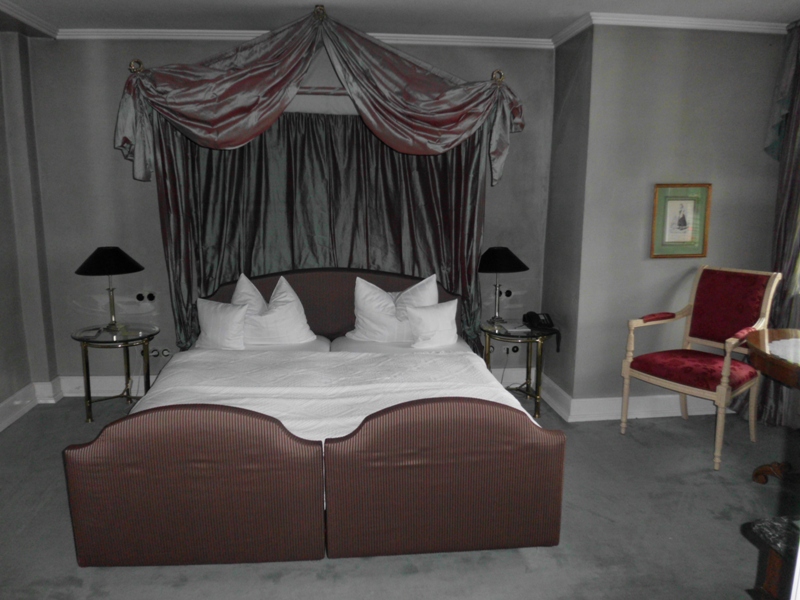
We stayed in one of their suites, with a wide balcony overlooking the Rhine and a huge marble bathroom, complete with private sauna and jacuzzi.

If we hadn't had all this wine-tasting and gastronomic dining on the agenda, we wouldn't have left the room.


I was glad we did venture out, though, because we discovered great wines in the Rheingau, in different price ranges, but nearly all of them of decent quality and fair value for money.


The Wine ...

We started our exploration with a visit to Schloß Johannisberg and a tour of the ultramodern Steinberg cellars at Kloster Eberbach. Afterwards we visited independent winemakers in the nearby towns.

It was interesting to see how in an area that's quite renowned for its wines, many of the local wine growers seemed to have little interest in actually selling their wines. One of them, when we asked if we could sample his wines, looked so surprised one would think he'd never had that request. He even had to check with his wife first, who wasn't home at the time.

When we came back a few hours later, he had recovered from the shock and sat down at the table with a couple of bottles. We ended up having a good chat and bought several of his wines: a lovely dry white, and his personal favourite: a medium dry weißherbst (a rosé made from one type of grape – pinot noir in this case – and harvested from one location). So everything worked out fine, but if we hadn't spoken German, we wouldn't have made it past the doorstep.

Now, my favourite discovery of the entire trip was Weingut Josef Leitz.

Not only were they incredibly accommodating by organising a short-notice private tasting for us; the guy who lead the tasting - Tobias, if I recall his name correctly - was friendly, welcoming, knowledgeable and clearly passionate about wine. He took the time to explain (in English, even) the individual characteristics of the vineyard's winemaking style and the different soils and 'Lagen' they worked with.

The Leitz tasting was one of the most enjoyable ones I've ever experienced. I can honestly say there wasn't a single wine I didn't like, even though they were all quite distinct. Leitz' wines are a perfect illustration of what a difference terroir makes in the final result.

Deciding which ones to buy became a true ordeal. Each of them unique, they all had an irresistible vigour and vibrance, intensely fragrant yet elegant, with a beautiful balance of acidity, minerality and luscious fruit.

After careful deliberation, we settled on one of his more modest dry ones for everyday consumption, and - for more special occasions - my favourite: the 2010 Rüdesheimer Berg Roseneck Spätlese, a sweeter wine with a delicate aroma of rose petals.

But before I get lost in lyrical outpourings, let me share a few photographs of:


The Rhine ...


The Wine Cellar ...


Zum Wohl!
♥ Bookmark or share this post ♥

27 Apr 2011

W is for Wine.


To regular visitors of my blog, it should come as no surprise that my 'W' post is about wine, especially because this whole A to Z series is dedicated to things that bring me joy and make life more interesting.

I love good wines. Over the past years, I've taken a few wine tasting courses, but I'm still more an aficionado than a connoisseur. However, next time I can free up a larger chunk of time, I am planning to go through the full sommelier training.

'Wine Cellar in Tuscany'.
© 2007, Delicious Italy - cc
Until that time, I'll settle for sampling and enjoying wines, attending wine fairs and tastings, and visiting wine regions and vineyards when I'm on holiday. An alternative I can live with, for sure.

In this post, for those of you who are interested, I want to share some basic information about what makes a good wine, and about wine tasting in general. I suggest you pour a glass and savour it while you read on. Cheers!


Wine Quality

The most important thing about wine, apart from the health benefits (when drunk in moderation), is that the person who drinks it, enjoys it.

All too often, people act snobbish about wine, often to disguise that they don't know much about it. It's true: wine tasting is an art and a skill, but that's not necessarily the only - or the best - way to enjoy wine.

If you love the taste of a particular wine, don't let anybody tell you that's bad. Personal enjoyment isn't linked to price or critics' opinions, and a wine doesn't have to be expensive to be pleasant, interesting or exciting.

On the most basic level of enjoying wine, reviews and ratings are irrelevant. However, as is the case with many aspects of life, when you learn more about a product or a process, you discover new layers of enjoyment, fascination and respect.

By studying wine and training your palate, you open yourself up to new levels of appreciation, not just for the product, but also for the craftmanship of the people who grew the grapes, harvested them, composed and produced the wine.

Compare this to an experienced musician, who would notice more intricacies of a piece of music; a basketball player who detects hidden strategies and opportunities when watching a game; or a writer, who can admire a good example of 'showing rather than telling' where other readers just see a sentence.

Winemaking truly is an art, which requires expertise in many areas.

The main factors that determine the quality of a wine are: the climate in which the grapes are grown, the soil, the grape itself, how the grapes are harvested, the winemaking process and the treatment / conservation of the finished product.

I don't want to go into too much detail, but to give an idea, I'll point out a few aspects that affect the taste and quality of a wine:

  • whether grapes are harvested by hand or not. Machines rip the grapes off the vine, but they're not selective: they take parts of leaves, branches, insects, unripe or overripe grapes along. All this ends up in the mixture of which the wine is made. A wine made of hand-picked grapes will usually have a more elegant, deep and complex flavour. (It will also be more expensive, as it was more labour intensive to produce.)
  • the type of soil and age of the vines affect the flavours present in the grape. Old vines (or vines in particular types of soil) tend to have deeper roots, which means that they can take in nutrients and water from more layers of soil. Each layer adds a nuance to the final taste, i.e. more depth and complexity.
  • the climate and microclimate in which the grapes grow. Temperature, the conditions and the length of the growing season, all affect the quality and sugar content of the grapes. The greatest wines tend to come from vineyards with the best location, due to temperature, orientation towards the sun, the presence of a river that reflects sunlight, surrounding vegetation, ...

This is by no means a comprehensive list, but it should give an idea of the complexity of the process, and of the fact that in many cases, a wine's price is an indication of quality, at least in the definition of craftsmanship, human energy that's gone into the process, complexity and depth of flavours.


Wine Tasting

I have chosen a video here to replace the 1,000 words I would need to convey the same information. I like how it summarises the most important basics:


Are you a wine person? Do you have a favourite wine?

--------
Image 1: 'Wine' by jhenrirose. Available under a creative commons license. © 2008, jhenrirose.
Image 2: 'Wine Cellar in Tuscany' by Delicious Italy. Available under a creative commons license. © 2007, Delicious Italy.
Image 3: '2003 Christmas House Wine Cellar' by Gatsby. Available under a creative commons license. © 2002, Gatsby.
Image 4: 'Vineyard 002' by Viña Caliterra. Available under a creative commons license. © 2008, Viña Caliterra.
♥ Bookmark or share this post ♥

21 Apr 2011

R is for Restaurant.

The Bar at The Horse & Groom. November 2010.

I love going out to dinner, especially to places that have a unique character. Fortunately I live in Belgium, in the heart of Europe, famous for its Burgundian lifestyle and surrounded by interesting culinary neighbours, each with a distinct focus and flavour.

A few days ago, the top 50 of the world's best restaurants was revealed, and I was happy to see that 2 of the top 20 restaurants were places I consider 'local'. Hof van Cleve - #15 and Oud Sluis - #17 are both less than an hour's drive away from where I live.

If I would ever get tired of those, there are 5 more top 20 restaurants in Paris, which is less than 3 hours away, and of course there's The Fat Duck in Maidenhead, just past London, about 4 hours.

My novel is set in the Cotswolds, so I spend quite a bit of time in England. I'm lucky to have great friends in the area, who love good food (and wine) as much as I do.

A few years ago, one of those friends introduced me to 'The Horse & Groom', a restaurant in the Cotswold village of Upper Oddington, England, and it's become my favourite in that area.

I've posted this review on my side-project blog 'The Enchanted Traveller' before, but in honour of my 'Restaurant' topic, I thought to give it a place here as well.

Part of the bar and dining area. Nov 2010.
There are so many aspects to 'The Horse & Groom' I like, it's hard to say what I like most.

First of all: it is cosy, with a relaxed and friendly atmosphere. Simon Jackson, the owner, welcomes his guests warmly and really goes out of his way to make you feel at home.

The inn itself is a 16th century building and its character has definitely been preserved, even though the interior has a more contemporary rustic touch now.

As soon as the weather gets damp or chilly, the fireplace is lit, which fills the space with a warm glow and a scent of burning wood that is just right for a perfect evening full of joy and good conversation.

Window seats near the fireplace. November 2010.
The seasonal menus offer a wide range of choices, without being so overloaded that it becomes difficult to choose.

Dinner menus contain about 6 to 7 starters, mains and desserts, and a few side orders. On top of these, there are daily specials on the board.

The vegetarian options are equally attractive, very well prepared and with the same amount of care put into flavours and textures as is the case with the other dishes.

The prices are fair, possibly at the higher end of what you'd expect in a village inn, but the quality of the food is so superb that what you pay is more than justified.

The chef, Jason Brewster, works with local produce as much as he can, and is committed to really cooking from fresh. As a result, everything you get on the table has been prepared in house and is just bursting with flavour. He and his kitchen team bake their own bread, make the stocks, sauces, chutneys, ice creams, puddings, even smoke the meats and fish.

Simon at work. November 2010.
This is all wonderful, but as far as I'm concerned, the characteristic that really sets the Horse & Groom apart is that Simon knows his wines. He knows them, and he loves them.

He will not push his knowledge on you or bore you with endless descriptions if you're not interested in wines, but when he spots that spark, and you get him talking, you immediately see that this is no marketing gimmick or put-on pretentiousness.

He genuinely cares, about the wines as well as the stories behind them: who has made them, what makes them special, and what you could drink them with to experience them in the best possible way.

The Horse & Groom offers over 25 wines by the glass, which gives you a lot of flexibility when you're dining with a smaller group - or if you just like variation.

To get an idea of the extensive selection, have a look at their wine list here.

(For completeness' sake: they seem equally passionate about their beers, but I'm more of a wine person so I can't speak from experience there.)

'Wine Staircase' in a cosy corner. Nov. 2010.
If you're in doubt which wine to choose, depending on what you like and/or what food you're having, you can always ask for advice. If someone else is taking care of your table, don't hesitate to ask if Simon would have a minute. He's definitely the man you'll want to talk to.

If you're getting a dessert, which I'd really recommend, you might want to consider one of the gorgeous 'sticky wines' to go with it. I think we've sampled the full range by now, and my absolute favourites are the Californian Quady 'Elysium' - Black Muscat, the Australian 'Cordon Cut' Clare Valley Riesling and the mouthwatering Pieropan 'Le Colombare'. These wines are truly liquid gold.

Before I get all lyrical, let me refer you to the Horse & Groom website for all the practical information you might need, and assure you that when you're in the Cotswolds, this restaurant is well worth a visit.

Even if you find you're not that close to Upper Oddington, you won't regret the detour. Do take someone who doesn't like wine, though. Chances are you'll need a designated driver!


What's your favourite restaurant?
♥ Bookmark or share this post ♥

9 Mar 2011

Roses, Thorns & International Women's Day.

Yesterday, March 8th, was International Women's Day.

It was also a busy day at work, so even though I'd thought of ways to celebrate me, myself and all other women, by the time I got home there wasn't much time and energy left to do anything besides cooking pasta (with sun-dried tomatoes and goat's cheese, in case you were wondering), pour a glass of the beautiful organic cava we've recently discovered, and toast with my lover, husband and best friend (all in one person) to the good things in life.

Earlier, over a quick laptop lunch, I'd decided to do something small and mildly meaningful in honour of Women's Day: supporting a female author by buying one of her books. What can I say, I love a win-win scenario!

After careful deliberation, I picked The Tapestry of Love by fellow Litopian Rosy Thornton.

I'd read the sample last week and liked it a lot. So far, its atmosphere reminds me of Peter Mayle's Provence novels and Frances Mayes' Tuscan Sun, but set in the Cévennes and with a more personal story woven in.

The Tapestry of Love is the kind of book that deserves to be read outside on a summer's day, when you're curled up in a hammock with a glass of wine by your side. However, in the absence of summer, curled up indoors in front of the fire will have to do. And yes, there will be wine.

How was your (International Women's) day?
♥ Bookmark or share this post ♥

19 Dec 2010

Rum Nom Nom...


Isn't it beautiful? The essence of summer captured in a stoneware jar. And what better time of the year to open it and savour the aromas of fruits, herbs and spices. If sunlight had a scent, this would be it!

The journey started last spring, when I got a rumtopf (the jar) from my father-in-law. He wasn't using it himself and thought I might. Not entirely an unselfish gift, I suspect, but much appreciated nonetheless.

I started it in late May with the first strawberries from my parents' garden and a few fresh herbs. In the following months I've added raspberries & more strawberries (both grown by my mum & dad), cherries and plums (from our own trees) and peaches and nectarines (store-bought).

The last batch of raspberries were added mid October, and I've let the rumtopf sit and ripen until now. Well, actually until last night, because we had a sneak peak and a quick taste to avoid disappointment during the grand opening today.

Oh yes, the recipe.

Honesty requires me to admit that I haven't followed any recipe religiously. As is usually the case with any of my kitchen or herbal experiments, the types and amounts of ingredients I've added after the start depended more on instinct and availability than on measured amounts. But that was the original idea behind rumtopf anyway, wasn't it?

The only thing I didn't mess with was the strength of the rum. Not only is that a matter of principle, but you need to get 54% vol. alc. or you risk decay.

Typically rum here is around 40%, so I've added food grade ethanol (94%) to get to the desired 54%.

 
Ingredients:

- 1 vanilla pod (sliced in 2 halves & scraped out)
- 1 sprig of rosemary
- 1 sprig of lemon balm
- rum (I used Havana Club Añejo Especial and a 5 year old Barbados Rum)
- cane sugar
- strawberries
- raspberries
- cherries
- plums
- peaches
- nectarines
Process:

- Use a big vessel. Wash it (I used soda + boiling water), rinse and dry.

- Put the herbs & spices in the pot. I'd strongly recommend adding a vanilla pod. You only detect a hint of it in the final result, but it's one of those little things that makes a difference.

- Choose ripe fruit, but not overripe. It's a matter of balance, really: it has to be ripe enough to be full of flavour, but still firm or it will turn soggy in the alcohol and give an unappealing end result.
I started with strawberries (about 500g) and raspberries (about 250g).

- Wash the fruit and clean it up, cutting out the overripe or damaged parts and removing stalks etc.

- For the 750g of fruit, I used 375g of cane sugar. Pour half of that sugar over the fruit and (carefully!) scoop it under. Try not to damage the fruit. Leave it for an hour and add the rest of the sugar.

- Pour ho-ho a bottle of rum (0,7l) over the fruit. It should be fully covered.
You'll find that some of the types of fruit will float to the top. I used two small plates (that just fit through the opening of the jar) and tried to lower them as level as I could onto the fruit. It never worked perfectly, but at least most of the fruit stayed underneath, and the alcohol should take care of the rest.

- For the consecutive layers, the original recipe(s) recommended adding 500g of a different fruit, 250g of sugar and half a bottle of rum each time, but as I've said above, I've played that more by ear, except for the 54% alcohol. There's no need to peel peaches, nectarines, plums, etc, as the skin softens up in the alcohol and adds an interesting bite.

- It's recommended to keep the rumtopf cool, not cold, and properly sealed. I used cling film and then put the lid on top. The jar got a corner of its own on a shelf in the cellar.

- Usually the last layer is added in October, after which it should sit for a while, to be ready for relishing by the darkest days of the year.

How to serve:

So far, we've only just sampled our rumtopf pure. Great, but be warned: it's bloody strong stuff. We had pink champagne biscuits with them (biscuits roses de Reims) and that was a great match. Who says France & Germany don't mix?

I expect it to taste great on different kinds of desserts: ice cream, frozen yoghurt, cake, cheesecake, pancakes, Belgian waffles, etc. I can imagine the drained fruit is also brilliant for fruit crumbles, pies or trifles and with regular, whipped or coconut cream. Apart from coconut cream, that's all stuff I don't have often, but I think I'm going to have to make a few exceptions here.

We're definitely going to try the liqueur in sparkling wine, white wine and experiment with different cocktails.

A few concluding thoughts:

It's so easy to do, and more fun than I'd anticipated, knowing that you're saving a bit of summer for the times when you'll need it most. Also, the fact that you've 'worked' on it over a period of 6 months, makes it quite special and symbolic.

I have a feeling that, providing you start of with a clean jar, firm fruit and you stick to the minimum alcohol percentage, it can't really go wrong. Mind, as this was my first try, that feeling might not correspond with scientific reality.

I've kept the most important bit for the end: when you serve your rumtopf, don't forget to toast to everything you've harvested over the past year: what you have accomplished, the people you've met, the lessons you've learnt and the joy and wonder you've felt.

Whatever the new year will bring, we'll be stronger to deal with it when we're grateful and aware about what we have right now. Cheers!

Rumtopf and pink champagne biscuits.

♥ Bookmark or share this post ♥

21 Nov 2010

Wine, Wine, Wine.

I've been quiet on the blog all weekend, but I've got the best excuse in the world: I was in Lille at the 'Salon des Vins des Vignerons Indépendants', known in short as 'the Lille Wine Fair'.

The 'Salon des Vins' is an annual event that takes place in different cities all over France. The fair is organised - as you can guess from its name - by the association of the French independent wineries. We've been going there for several years now, and I love it, in spite of the fact that it seems to attract more visitors every year and it's gradually getting a bit too crowded. Not so good for the visitors, but great for the wineries, of course.

The fair is absolutely huge. There were over 500 wineries present this year, and they all bring a number of their available wines for the visitors to taste and possibly buy.
You can meet wine makers from the different wine regions all over France, each with their own personal style and flair, in their wines as well as in how they present themselves to you. And to me that's one of the great advantages here: you get to see the people behind the wines and the pride they have in their products and their businesses that often go back several generations.
♥ Bookmark or share this post ♥
11 Nov 2010

Ideas for the Holidays.

Amazing how time flies... we're nearly halfway into November! Less than a month from now, many of us will be preparing for the holidays and thinking about presents to put under the Christmas / Yule / Hanukkah tree.
In order to get myself in the right mindset, in the next couple of weeks I'm going to try and post a bunch of party, decoration, food & drink and gift ideas.

(c) christmasstockimages.com
First of all: the tree. I have to admit: I love the smell of a real tree. Still, I hate the thought of slaying it just to decorate the house for a while.
Therefore, many years ago, I decided to buy a tree with roots and plant it out in the garden afterwards for reuse the next year. Unfortunately that didn't work out. By the time I got around to putting it outside, it was too far gone.

After three years of miserable failure, I finally succeeded to save one. I planted it in my herb garden (where it really didn't fit in), didn't dig it out for the following holiday seasons and eventually moved it to another part of the garden where it died anyway. In my defense, I did cut it up and compost it.

In the meantime I've found a compromise: I wait until a couple of days before Christmas, when all normal people have long got their tree and the only ones left are the poor little ugly trees nobody wanted. That's when I come in, a superhero with wool mittens, offering that little, despairing, cut-down tree an opportunity to fulfil its final purpose: to bring beauty and joy to a living room. And every year I'm surprised what a bit of careful pruning, lots of sparkly lights and lavish gold-coloured decoration can achieve.

But as perceivers go (another not-so-covert MBTI reference), I'm always open to consider alternatives for the classic tree, and a few of these certainly hold potential:

Last year, on a champagne tasting trip to France, I saw this at the Mercier house:


Wouldn't that make a brilliant, bubbling Christmas tree? I swear, if anyone wants to get me one of those, I'll take good care of it! I might even share.

Just in case you're not a millionaire, here are a few other, more budget friendly suggestions:

A tree made with your favourite chocolates:

Edible Christmas tree


Or your best-loved books:

Library christmas tree 2006


And I just love these:

And now for something completely different, but not entirely: if you'd consider getting someone a pet for a present, see how to wrap it below. Buffoonery, I say!

♥ Bookmark or share this post ♥
3 Nov 2010

There is life before forty.

Have you seen this slideshow on the website of Food & Wine magazine? It features 40 people under the age of 40 who've all managed to make a difference, big or small, in the way their countrymen (and women) eat and drink. So what are the rest of us waiting for?

These were my favourites:

  • Cocoa beansMadécasse, a chocolate company making their products right where their cocoa grows: Madagascar.
  • Food artist Jennifer Rubell. Anybody who makes desserts in balloons deserves a special mention.
  • Urban & rooftop farming. These almost made me want to get a chicken. Or a house with a flat roof.
  • Matt Jennings. You've got to love a cheesemaker who dunks cheese in Belgian ale.
  • Annemarie Ahearn's farm-to-table cooking school. Where you can kill your pumpkin and eat it too.
  • Several businesses like Emily & Rob's, helping artisans to sell their products, so they can continue doing what they do best.

Check out the full slideshow here. Which ones do you like best?

On a side note: this blog post made it clear that in over a month of blogging, I hadn't used the labels "wine" or "chocolate" even once. How is that even possible?
♥ Bookmark or share this post ♥
Related Posts Plugin for WordPress, Blogger...